
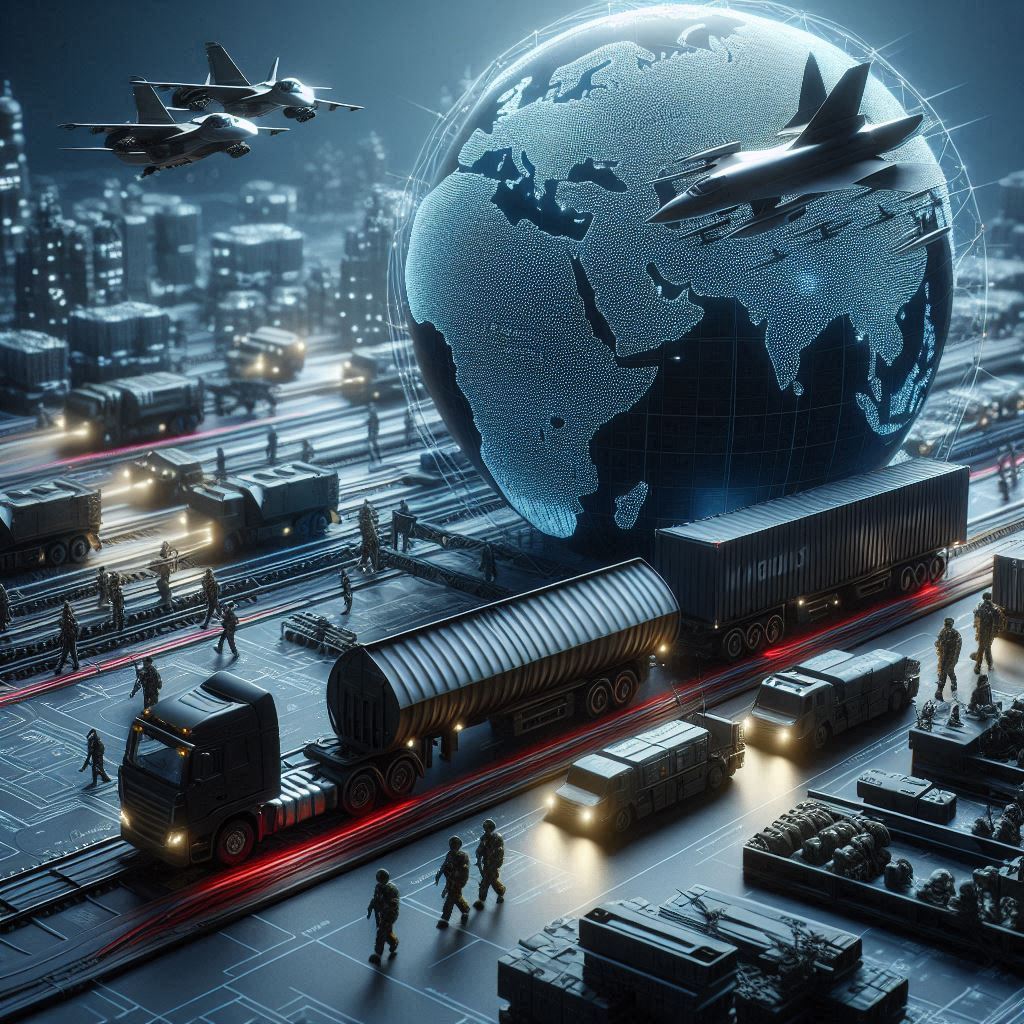
Effective logistics are crucial for maintaining credible deterrence and defence. Ensuring rapid deployment and seamless coordination enhances our ability to deter aggression and respond to emergencies, safeguarding global security in an ever-changing geopolitical landscape.
Dear Reader,
Logistics is the backbone of credible deterrence and defence, a principle that has long been fundamental to military strategy and operations. In today’s volatile security environment, the importance of logistics has become even more apparent. NATO’s ability to move troops and equipment efficiently to strategic locations is critical to deterring aggression and ensuring a rapid response to emergencies.
The role of logistics in military operations
Logistics encompasses the planning, execution and coordination of the deployment and maintenance of military forces. It encompasses a wide range of activities, including transport, supply chain management and infrastructure development. Effective logistics ensures that military units are well equipped and supplied and are able to respond promptly to threats.
Key components of military logistics
Transport: Efficient transport networks are essential for the movement of troops, equipment and supplies. This includes the use of air, land and sea routes to ensure the rapid deployment and supply of troops.
Supply chain management: Ensuring a steady flow of supplies, from ammunition to medical supplies, is critical. Effective supply chain management minimises delays and bottlenecks that could affect military operations.
Infrastructure development: Robust infrastructure, including roads, harbours and airfields, supports the rapid deployment and sustainment of forces. Investment in infrastructure improves overall logistical capabilities.
Challenges in military logistics
Several challenges can affect the efficiency of military logistics:
Geopolitical factors: changing geopolitical conditions can affect access to key transport routes and logistical hubs.
Technological advances: To maintain logistics superiority, it is essential to keep pace with technological advances in transport and supply chain management.
Coordination and communication: Effective logistics requires seamless coordination and communication between different military units and allied forces.
Improving NATO’s logistics capabilities
For NATO, improving logistics capabilities is critical to maintaining credible deterrence and defence. Some key strategies are outlined below:
Interoperability: it is essential to ensure that NATO forces can work together seamlessly. This includes the standardisation of equipment and procedures between member states.
Rapid Deployment: Developing rapid deployment capabilities, such as pre-positioned equipment and forward-deployed forces, enhances NATO’s ability to respond quickly to threats.
Investment in infrastructure: Investment in transport infrastructure and logistical hubs in member states and strategic locations around the world strengthens overall logistical capabilities.
Advanced technology: The use of advanced technologies, such as autonomous vehicles and AI-powered supply chain management, can significantly increase logistical efficiency and effectiveness.
Conclusion
In the current security environment, logistics is more critical than ever for credible deterrence and defence. NATO’s ability to move troops and equipment quickly and efficiently is critical to deterring aggression and responding effectively in emergencies. By investing in robust logistics capabilities, NATO can ensure that it remains a formidable force in maintaining global security.
Your
Thomas Hellmuth-Sander
Schreibe einen Kommentar